

Do you wake up tired even after eight hours of sleep? You are not alone. This common experience often stems not from a lack of sleep in terms of quantity, but a deficit in its quality, specifically in the crucial stages of deep sleep. Achieving truly restorative rest is a cornerstone of physical health, cognitive function, and emotional resilience. 1 This article delves into the science of deep sleep and provides a comprehensive, evidence-based guide to help you cultivate the habits necessary to wake up feeling genuinely refreshed and recharged.
Understanding Deep Sleep: The Foundation of Restoration
The Stages of Sleep
Sleep is not a monolithic state of unconsciousness; it is a dynamic and highly organized process composed of multiple cycles, each lasting approximately 90 minutes. These cycles are divided into two primary types: Non-Rapid Eye Movement (NREM) sleep and Rapid Eye Movement (REM) sleep. 2 NREM sleep is further broken down into three stages, progressing from light sleep (N1) to a more substantial sleep (N2) and finally to deep sleep (N3). It is this N3 stage that is commonly referred to as “deep sleep” or “slow-wave sleep,” characterized by the presence of low-frequency, high-amplitude delta waves on an electroencephalogram (EEG). 3
Deep sleep is fundamentally different from REM sleep, which is most associated with vivid dreaming. While REM sleep is critical for emotional regulation, learning, and memory consolidation, deep sleep is the body’s prime time for physical renovation and cerebral maintenance. 2
Why Deep Sleep Matters
The significance of deep sleep extends far beyond simply not feeling tired. It is during this phase that the body engages in intensive physical restoration. Blood flow to the muscles increases, facilitating tissue repair and growth. 4 This is also the period when the pituitary gland releases pulses of human growth hormone, which is essential for muscle development, bone building, and metabolism. 5
Concurrently, the brain is exceptionally active in its own form of housekeeping. The glymphatic system, the brain’s unique waste-clearance mechanism, becomes highly active during deep sleep, flushing out metabolic byproducts like beta-amyloid proteins, which are associated with neurodegenerative diseases. 6 Furthermore, deep sleep plays a pivotal role in memory consolidation, transferring information from the short-term hippocampus to the long-term cortex, solidifying what we have learned during the day. 7
Common Reasons You Don’t Sleep Deeply
Multiple factors can disrupt the architecture of your sleep cycle, robbing you of precious deep sleep. Chronic stress and anxiety can keep the nervous system in a heightened state, making it difficult to descend into the profound relaxation required for slow-wave sleep. 8 Poor sleep hygiene, such as irregular bedtimes and stimulating pre-bed activities, confuses the body’s internal clock. The consumption of caffeine, nicotine, and alcohol—despite alcohol’s sedative initial effects—fragments sleep and severely suppresses deep sleep stages. 9 Exposure to blue light from smartphones, tablets, and computers in the evening inhibits the production of melatonin, the hormone that signals sleep onset. 10 Furthermore, underlying medical conditions such as sleep apnea, which causes repeated breathing interruptions, and restless leg syndrome can directly prevent sustained periods of deep sleep. 11
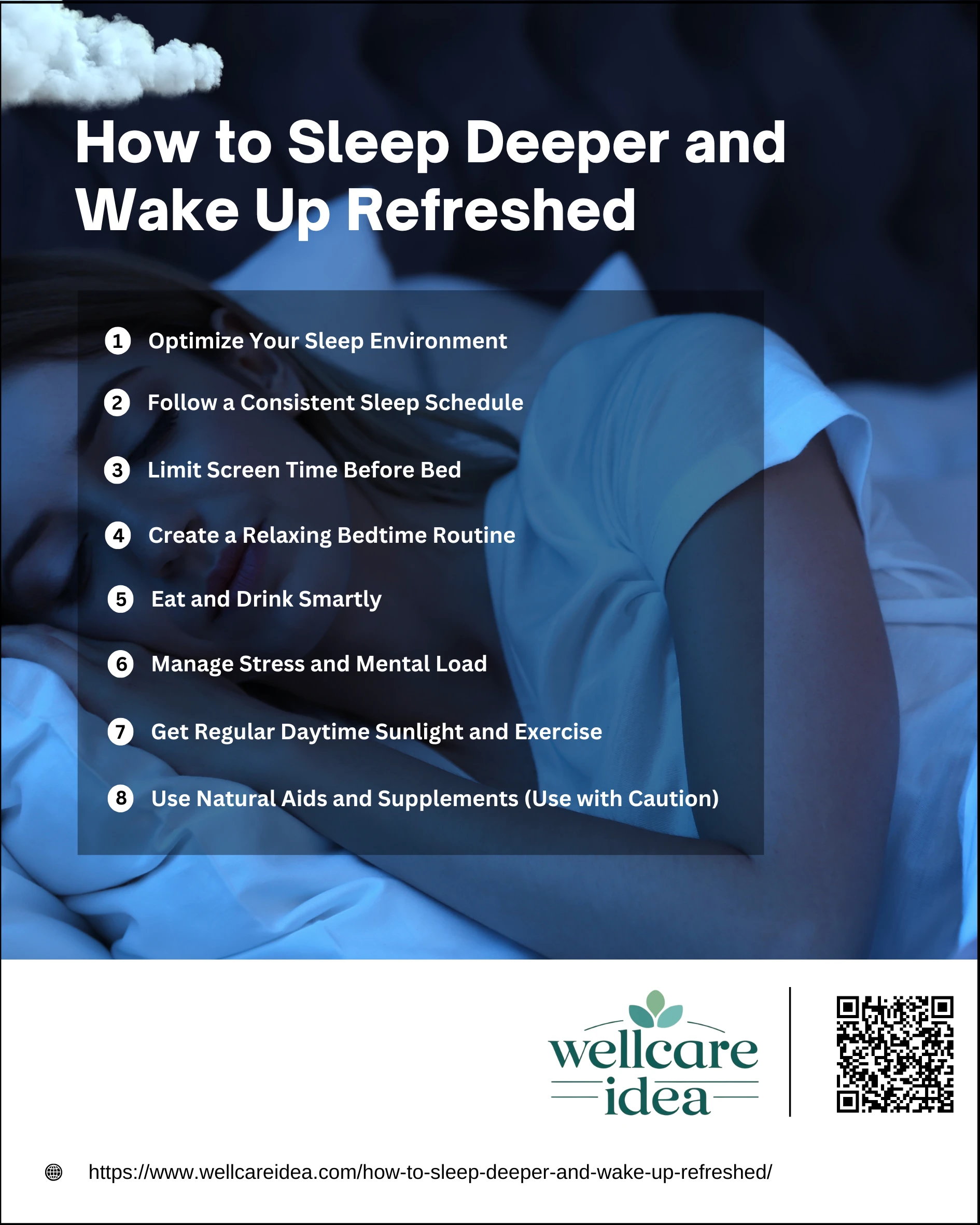 Science-Backed Tips to Sleep Deeper and Wake Up Refreshed
1. Optimize Your Sleep Environment
Transforming your bedroom into a sanctuary for sleep is a powerful first step. The ideal temperature for sleep is cool, between 60–67°F (15–19°C), as a drop in core body temperature is a natural sleep trigger. 12 Use blackout curtains to achieve total darkness and consider a white noise machine to mask disruptive environmental sounds. Your mattress and pillows should provide adequate support to maintain spinal alignment and prevent aches. Introducing soothing scents like lavender through a diffuser has been shown in studies to promote deeper, more stable sleep. 13
2. Follow a Consistent Sleep Schedule
The human body operates on a 24-hour internal cycle known as the circadian rhythm. By going to bed and waking up at the same time every day—including weekends—you reinforce this natural rhythm, making it easier to fall asleep and progress efficiently through sleep stages, including deep sleep. 14 Sleeping in late on days off, often referred to as “social jet lag,” can desynchronize your internal clock, undermining sleep quality during the week.
3. Limit Screen Time Before Bed
The blue light emitted by electronic devices is particularly effective at suppressing melatonin production. 15 To protect your sleep, make the last hour before bed a screen-free zone. Engage in calming activities such as reading a physical book, journaling, or listening to soft music. If device use is unavoidable, enable a “night shift” or blue light filter feature and dim the screen brightness significantly.
4. Create a Relaxing Bedtime Routine
A consistent, wind-down routine signals to your brain and body that it is time to shift into sleep mode. This can include practices such as mindfulness meditation, which has been demonstrated to improve sleep quality, or gentle stretching. 16 Taking a warm bath 1-2 hours before bed can also be beneficial; the subsequent drop in body temperature after the bath promotes drowsiness. Sipping on a cup of caffeine-free herbal tea, like chamomile, can provide a soothing ritual.
5. Eat and Drink Smartly
Your dietary choices in the evening can either support or sabotage deep sleep. A light evening meal that includes foods rich in magnesium (leafy greens, nuts, seeds) and tryptophan (oats, turkey, milk) can be beneficial. Caffeine has a long half-life; avoid it after noon to prevent interference with sleep. 17 While alcohol may induce sleep initially, it metabolizes into compounds that disrupt sleep architecture and suppress REM and deep sleep later in the night. 9 Stay hydrated throughout the day but taper off fluid intake an hour or two before bed to minimize disruptive nighttime trips to the bathroom.
6. Manage Stress and Mental Load
An overactive mind is one of the greatest enemies of deep sleep. Incorporating a daily practice of mindfulness or gratitude journaling can help manage baseline stress levels. 18 For those who lie in bed with racing thoughts, a “brain dump” exercise—writing down all pending tasks and worries—can be a powerful tool to clear mental space. For persistent anxiety or insomnia, seeking therapy, such as Cognitive Behavioral Therapy for Insomnia (CBT-I), is a highly effective, evidence-based solution. 19
7. Get Regular Daytime Sunlight and Exercise
Exposure to natural sunlight, particularly in the morning, is one of the most potent signals for reinforcing a healthy circadian rhythm. 20 Engaging in regular, moderate physical activity has been consistently linked to improvements in sleep quality, including increased time spent in deep sleep. 21 However, timing is crucial; finish intense workouts at least 2-3 hours before bedtime, as they can be overstimulating for some individuals.
8. Use Natural Aids and Supplements (Use with Caution)
Certain supplements have shown promise for supporting sleep. Magnesium plays a role in nervous system regulation, while melatonin is the direct hormonal signal for sleep. 22 Other compounds like glycine and herbs like valerian root have also been researched for their sleep-promoting properties. 23 It is imperative to consult with a healthcare professional before starting any supplement regimen to ensure safety and appropriateness for your individual health profile.
Tracking and Improving Sleep Quality
In the quest for better sleep, knowledge is power. Wearable devices like Fitbit or the Oura Ring, along with smartphone applications, can provide insights into your sleep patterns, including estimates of time spent in light, deep, and REM sleep. A simpler, yet highly effective method is maintaining a sleep diary, where you log bedtime, wake time, and subjective feelings of refreshment. The ultimate metric of success, however, is not a number on a screen but how you feel upon waking and throughout the day.
When to Seek Professional Help
If you consistently implement healthy sleep practices yet still struggle with persistent insomnia, overwhelming daytime fatigue, or significant mood changes, it may be time to consult a professional. 24 Signs of potential sleep disorders include loud snoring, witnessed pauses in breathing (a sign of sleep apnea), or uncontrollable leg movements. A primary care physician or a sleep specialist can evaluate your symptoms and may recommend a sleep study (polysomnography) to obtain a detailed analysis of your sleep architecture and diagnose any underlying conditions.
Conclusion
Deep sleep is not a luxury; it is a non-negotiable pillar of health, directly influencing our physical restoration, mental clarity, and emotional balance. By understanding its profound importance and taking proactive, evidence-based steps to nurture it, we can transform our relationship with rest. The journey to more refreshing sleep begins with small, consistent changes. Start tonight by dimming the lights an hour earlier or establishing a calming bedtime ritual. A refreshed morning begins with how you treat your night.