
In our fast-paced modern world, stress is often viewed as a mental challenge. However, the impact of chronic stress extends far beyond our thoughts—it registers within our bodies on a cellular level 1 When you experience ongoing pressure, your body can literally “store” this stress in the form of muscle tension, pain, and other physical manifestations. This happens because your nervous system remains in a constant state of high alert, even after the initial stressor has passed 2 The good news is that innovative approaches known as somatic exercises offer a powerful way to release this stored tension. These gentle, mindful movements help reconnect the mind and body to facilitate healing. By learning to listen to your body’s signals, you can begin to drain these emotions of their power, relieving both physical discomfort and the mental patterns that maintain stress. In the following sections, we will explore five specific somatic exercises that can help you release the stress stored in your body.
What Are Somatic Exercises?
Somatic exercises are awareness-based, body-oriented practices specifically designed to release chronic muscle tension caused by stress or trauma. The term “somatic” comes from the Greek word “soma,” meaning “the living body in its wholeness. Unlike conventional workouts that focus on strengthening muscles or improving cardiovascular fitness, somatic movement emphasizes internal physical perception and experience 3 While traditional exercise often prioritizes calories burned or muscles worked, somatic practices focus on the mind-body connection, helping you develop a deeper awareness of how your body feels in each moment 2
The science behind somatic exercises lies in their ability to influence both the nervous system and the brain’s capacity for change, known as neuroplasticity 2 These practices leverage the understanding that mental and emotional factors can manifest as physical tension, and conversely, that addressing physical tension can alleviate mental and emotional distress. Somatic approaches work by calming the nervous system and helping to complete the natural stress cycle that may have been interrupted during traumatic or stressful events. Regular practice of somatic exercises offers numerous benefits including enhanced emotional regulation, reduced anxiety and stress, improved body awareness, and support for trauma recovery. By engaging in these gentle practices, you can essentially re-educate your nervous system to stop sending signals that keep muscles chronically tight, allowing for profound relaxation and ease of movement 3
Why Stress Gets Stored in the Body
To understand how stress becomes trapped in the body, it helps to know what happens in your nervous system when you face perceived threats. When you encounter a stressful situation, your body instinctively initiates a fight-or-flight response designed to protect you from danger 4 This survival mechanism causes immediate physiological changes including shallow breathing, a rapid heartbeat, and muscle tension as your body prepares for action 4 In truly dangerous situations, this response mobilizes you to fight, flee, or freeze. The problem arises when this heightened state of alert continues long after the threat has passed, keeping your nervous system on permanent defense.
In our contemporary lives, where stressors are often psychological rather than physical threats, this defense mechanism can become chronic. When stress isn’t fully released, the body remains in a state of tension, with muscles staying tight and the nervous system maintaining a heightened alert status. You’ve likely experienced this yourself in the form of neck stiffness, shoulder tension, a clenched jaw, or tight hips after emotionally stressful situations. These physical manifestations are not just incidental—they represent the literal storage of stress in your body. Over time, this chronic tension can lead to pain, discomfort, and a narrowed “window of tolerance” where even minor stressors trigger significant physical and emotional reactions. Somatic practices effectively address this stored tension by gently guiding the body to complete the stress cycle and discharge the pent-up energy that keeps your nervous system in a state of constant alert.
Top 5 Somatic Exercises to Release Stress
Engaging in regular somatic practice can significantly reduce stored stress and increase your resilience to future stressors. The following exercises are designed to be gentle, accessible, and effective for releasing tension trapped in your body.
1. Body Scan Meditation
The body scan is a fundamental somatic practice that cultivates deep awareness of physical sensations throughout your body. This technique has its roots in mindfulness and somatic therapy, and involves systematically bringing attention to different areas of your body without judgment. To practice, find a comfortable position lying on your back with your arms resting at your sides. Close your eyes and take a few deep breaths to center yourself. Begin by bringing your awareness to the toes of your left foot, noticing any sensations—warmth, tingling, tension, or numbness—without trying to change anything. Slowly move your attention up through your left foot, ankle, calf, knee, and thigh, simply observing whatever you find. Repeat this process with your right leg, then continue upward through your torso, back, chest, shoulders, and down each arm to your fingertips. Finally, bring awareness to your neck, jaw, facial muscles, and scalp. The primary benefit of this practice is developing heightened body awareness, which facilitates emotional regulation and deep relaxation by helping you recognize and release tension you might otherwise ignore.
2. Somatic Breathwork
Conscious breathing exercises serve as an instant stress reliever that directly calms your nervous system. Somatic breathwork involves practicing conscious, slow, diaphragmatic breathing while attentively sensing bodily sensations. This technique activates the parasympathetic nervous system, which is responsible for the “rest and digest” functions that counterbalance stress. To practice, sit or lie comfortably and place one hand on your chest and the other on your abdomen. Inhale deeply and slowly through your nose, allowing your belly to expand fully rather than raising your chest. Exhale slowly through your mouth, feeling your abdomen naturally fall. Aim to make your exhalation slightly longer than your inhalation, as this specifically enhances the relaxation response. As you breathe, pay attention to any sensations that arise in your body—perhaps the movement of your ribcage, the air passing through your nostrils, or the feeling of release with each exhale. The profound benefits of breathwork include calming anxiety, releasing chest tension, and restoring balance to an overstimulated nervous system.
3. Gentle Shake and Tremor Release
The gentle shake and tremor release technique harnesses the body’s natural mechanism for discharging stress and trapped energy 5 This practice mimics the natural stress-release mechanisms observed in animals, who instinctively tremble to release survival energy after threatening encounters. To practice this exercise, stand comfortably with your feet shoulder-width apart and your knees slightly bent. Begin by gently shaking your hands, as if you’re trying to flick water off your fingertips. Gradually allow this shaking motion to move up into your wrists, arms, and shoulders. Then, incorporate your lower body by gently bouncing on the balls of your feet, allowing your knees to remain soft and relaxed. Let the shaking movement spread throughout your entire body for 2-3 minutes, breathing naturally throughout the process. If you notice natural tremors or vibrations beginning in any part of your body, allow them to happen rather than suppressing them. The key benefits of shaking include discharging trapped nervous energy, resetting the nervous system, and releasing deep muscular tension, particularly from the shoulders and upper body.
4. Pandiculation (Relearning Muscle Release)
Pandiculation is a neurobiological process that resets the brain-muscle connection through slow, conscious contraction and release of muscle groups. This natural movement is what your body instinctively does when you wake up—that satisfying full-body stretch and yawn that helps transition from rest to activity. Unlike stretching, which simply lengthens muscles, pandiculation communicates directly with your nervous system to release chronic tension. To practice, lie on your back with your knees bent. Slowly raise your right arm toward the ceiling, consciously contracting the muscles as if you’re reaching for something just beyond your grasp. Hold this gentle contraction for 5-10 seconds, paying close attention to the sensation of tension. Then, even more slowly, begin to release the contraction, as if you’re letting go of a heavy weight. Finally, completely relax your arm by your side and notice the sensation of release for 10-15 seconds before repeating with the left arm. The primary benefits of pandiculation include more effective muscle relaxation than stretching alone and a reset of the nervous system’s communication with tight muscles.
5. Pelvic Rocking
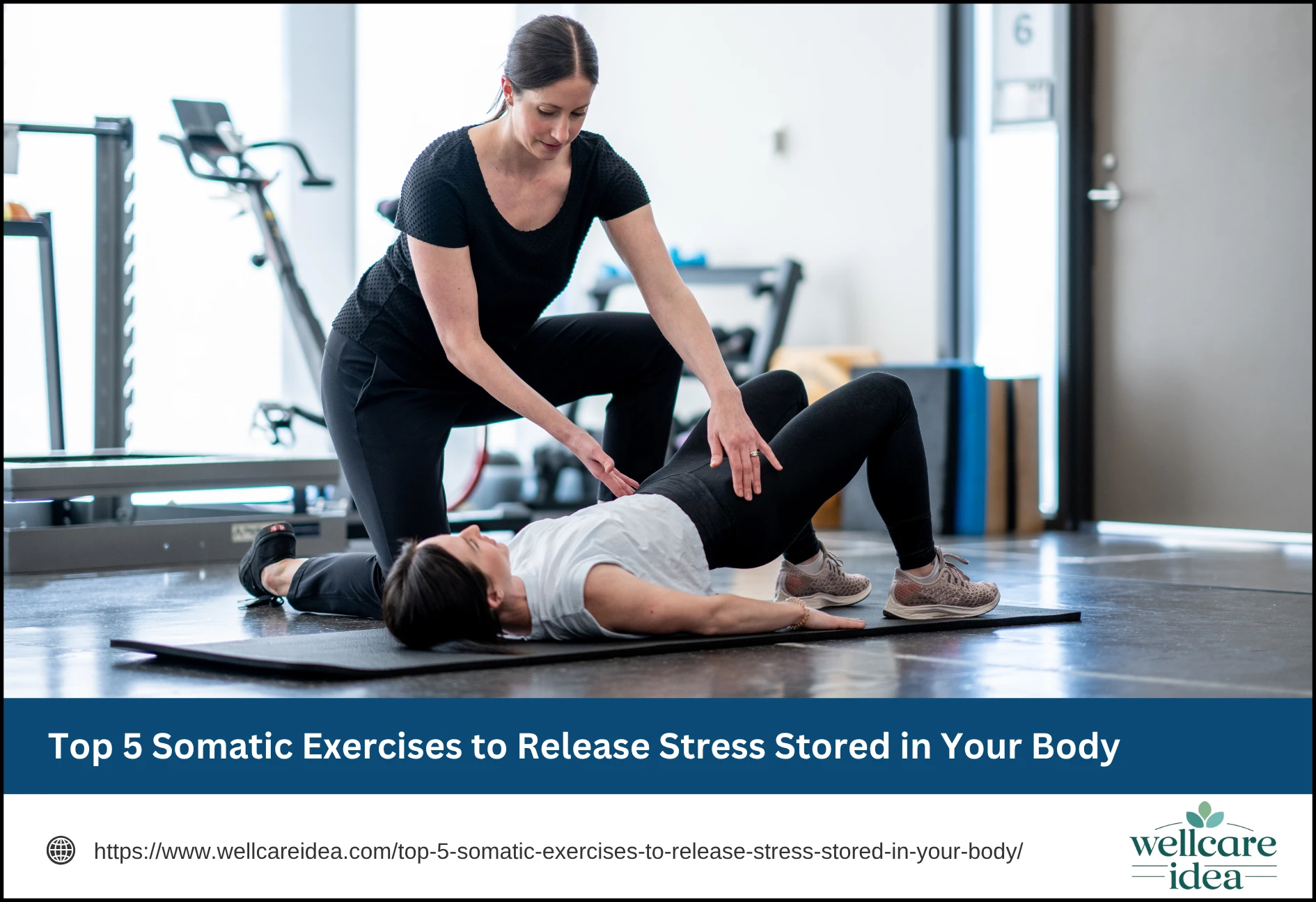
Pelvic rocking is a gentle somatic movement that releases tension accumulated in the hips and lower back—areas where emotional stress is commonly stored. This practice promotes both emotional release and spinal mobility while creating a sense of grounding. To practice, lie on your back with your knees bent and feet flat on the floor, hip-width apart. Place your arms comfortably at your sides with palms facing down. Begin by gently arching your lower back, tilting your pelvis forward as if you’re trying to create a small space between the small of your back and the floor. Hold this position for a moment, then reverse the movement by gently pressing your lower back toward the floor, tilting your pelvis backward. Move slowly and rhythmically between these two positions, synchronizing the movement with your breath. You might inhale as you arch and exhale as you press down. Continue this gentle rocking motion for 1-2 minutes, focusing on the sensation of movement in your pelvis and lower back. The key benefits of this exercise include releasing stored tension in the hip area, improving spinal flexibility, and creating a sense of physical and emotional grounding.
Table: Quick Reference Guide for Somatic Exercises
| Exercise | Key Benefit | Practice Time |
| Body Scan Meditation | Enhances body awareness and emotional regulation | 5-15 minutes |
| Somatic Breathwork | Activates relaxation response and calms anxiety | 2-5 minutes |
| Gentle Shake and Tremor Release | Discharges trapped nervous energy | 2-3 minutes |
| Pandiculation | Resets brain-muscle connection | 3-5 minutes |
| Pelvic Rocking | Releases tension in hips and lower back | 1-2 minutes |
Tips for Practicing Somatic Exercises Safely
As you begin exploring somatic exercises, keeping a few guidelines in mind will help ensure a safe and beneficial practice. First, start slowly and approach these exercises with curiosity rather than force 5 The goal is not to achieve perfect form but to develop greater awareness of your body’s unique signals and responses. Second, create a quiet, safe space for your practice where you’re unlikely to be interrupted. This environment will help you feel secure as you explore sensations that might sometimes feel unfamiliar or vulnerable. Third, and most importantly, listen to your body throughout each practice—if something feels overwhelming or painful, stop and return to it another time.
Remember that consistency matters far more than intensity when it comes to somatic work. Daily short sessions of just a few minutes are more effective than occasional longer practices. You may also find it helpful to combine somatic exercises with complementary practices like journaling about your sensations or incorporating breathwork for deeper awareness 3 If you have a history of severe trauma or PTSD, consider seeking guidance from a trained somatic therapist who can provide personalized support. As Harvard Health notes, while somatic approaches show great promise, they work best as part of a comprehensive approach to wellbeing that may include other proven therapies.
Conclusion
Somatic exercises offer a powerful pathway to release the stress that accumulates in our bodies through the challenges of daily life. By practicing the techniques outlined above—body scanning, somatic breathwork, gentle shaking, pandiculation, and pelvic rocking—you can begin to discharge stored tension and reset an overactive nervous system. These practices remind us that genuine healing is not just mental—it must be embodied. As you explore these five practices, you will likely notice subtle shifts in how you carry yourself, how you respond to stressors, and how connected you feel to your physical experience.
The journey toward releasing stored stress begins with simple awareness—noticing where you hold tension and gently inviting those places to relax and release. When you move with awareness, you truly move toward freedom from the physical burden of chronic stress. Your body has an innate capacity to heal and find balance when given the proper attention and tools. By incorporating these somatic exercises into your routine, you’re not just managing stress symptoms—you’re fundamentally transforming your relationship with your body and its responses to the world around you 3