
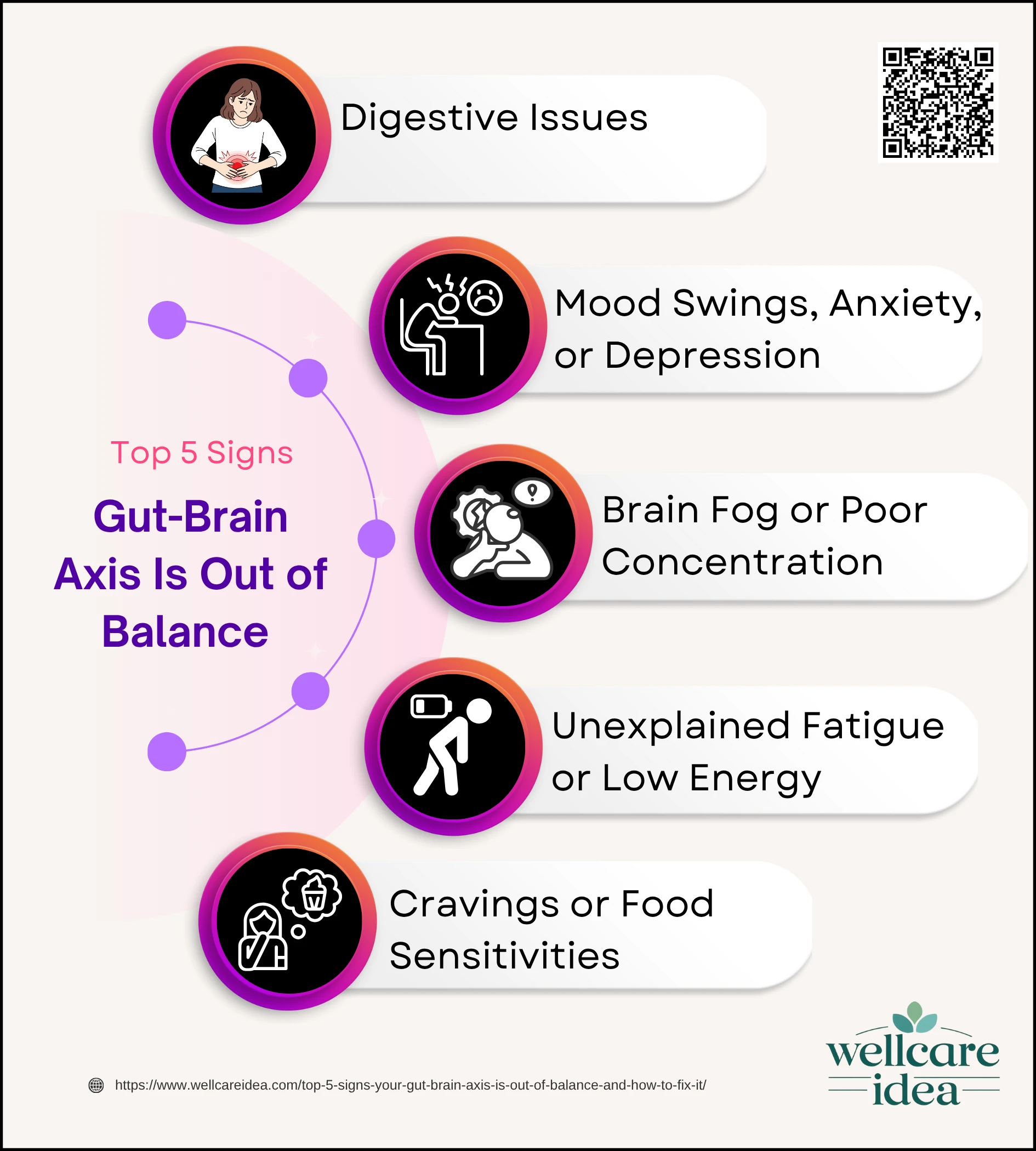
Have you ever felt “butterflies” in your stomach before an important event? Or experienced digestive upset during stressful times? These common sensations offer glimpses into an intricate communication network connecting your gut and brain known as the gut-brain axis. This bidirectional superhighway enables constant dialogue between your digestive system and brain, influencing everything from your mood and energy levels to your cognitive function 1 When this system functions harmoniously, it supports both physical and mental wellbeing. However, when the balance is disrupted—through poor diet, chronic stress, or other factors—it can subtly manifest through various symptoms affecting your digestion, emotional state, and mental clarity 2 Recognizing these signs is the first step toward restoring this crucial connection and reclaiming your overall health.
What Is the Gut-Brain Axis?
The gut-brain axis represents one of the body’s most fascinating communication systems, a continuous feedback loop connecting your gastrointestinal tract with your central nervous system. This connection occurs through multiple pathways, including the vagus nerve—a long cranial nerve that acts as a superhighway transmitting signals in both directions 3 Additionally, your gut houses its own extensive network of neurons called the enteric nervous system, often referred to as the “second brain” 4 Chemical messengers called neurotransmitters play a crucial role in this dialogue. Surprisingly, approximately 90% of your body’s serotonin—a key regulator of mood—is produced in the gastrointestinal tract rather than the brain 5 Your gut microbiota, the diverse community of microorganisms living in your intestines, also actively participates in this conversation by producing neurotransmitters, regulating inflammation, and influencing the production of other chemical messengers that can affect brain function 6 This complex system ensures that your mental state can influence your digestive function, and conversely, your gut health can significantly impact your brain and emotional wellbeing.
Sign 1 – Digestive Issues (Bloating, Constipation, Diarrhea)
When your gut-brain axis falls out of balance, some of the most immediate and noticeable symptoms often appear as digestive disturbances. You might experience regular bloating, constipation, diarrhea, or abdominal discomfort that seems to have no clear medical cause. These symptoms frequently stem from an imbalance in your gut microbiome, a state known as dysbiosis, where harmful microbes potentially outnumber beneficial ones 7 This microbial imbalance can disrupt normal gut motility—the coordinated muscular contractions that move food through your digestive tract—leading to either accelerated transit (resulting in diarrhea) or slowed transit (causing constipation) 8 The stress connection further exacerbates these issues; when you experience chronic stress, your body releases cortisol and other stress hormones that can alter gut motility, decrease digestive enzyme production, and reduce blood flow to the intestines 9 To monitor your digestive health, keep a simple log of your symptoms alongside your meals and stress levels—this can help identify patterns and triggers that may be related to gut-brain miscommunication.
Sign 2 – Mood Swings, Anxiety, or Depression
Your gut health exerts a powerful influence over your emotional landscape, thanks to the constant chemical communication along the gut-brain axis. Research has revealed that people with depression often have different microbial profiles in their guts compared to those without mood disorders, highlighting the strong correlation between gut health and mental wellbeing 10 The mechanisms behind this connection involve neurotransmitter production: beneficial gut bacteria like Lactobacillus and Bifidobacterium can produce GABA and serotonin—neurotransmitters that contribute to feelings of calm and emotional balance 11 When your gut microbiome lacks diversity or contains an overabundance of pro-inflammatory bacteria, this can contribute to neuroinflammation, blood-brain barrier dysfunction, and neurotransmitter imbalances that negatively affect mood 12 Additionally, the cyclical relationship between stress and gut dysfunction means that psychological stress can alter the gut environment, which in turn may heighten anxiety and depression 13 Recognizing that mood changes often coincide with digestive issues can provide important clues that your gut-brain axis may need attention.
Sign 3 – Brain Fog or Poor Concentration
If you frequently experience mental fatigue, difficulty focusing, or memory lapses—often described as “brain fog”—your gut-brain axis may be calling for help. This cognitive dysfunction frequently stems from systemic inflammation that originates in the gut but reaches the brain through various communication pathways 14 When the gut lining becomes inflamed and more permeable (often called “leaky gut”), it allows substances to enter the bloodstream that can trigger immune responses and inflammation throughout the body, including the brain 15 This neuroinflammation can impair cognitive function, leading to struggles with concentration, mental clarity, and memory recall. Additionally, an imbalanced gut microbiome may produce fewer beneficial metabolites like short-chain fatty acids (SCFAs), which possess anti-inflammatory properties that benefit both the gut lining and brain health 16 The resulting mental fatigue and fog can be frustrating, but importantly, these cognitive symptoms may improve through dietary interventions that support a healthier gut environment, such as increasing consumption of fiber-rich foods and potentially incorporating probiotics 16
Sign 4 – Unexplained Fatigue or Low Energy
Persistent, unexplained fatigue that doesn’t improve with rest may indicate an imbalance in your gut-brain axis. This connection operates through several mechanisms, with nutrient absorption playing a central role. When your gut lining is compromised or inflamed, it cannot properly absorb essential vitamins and minerals from food—including iron, B vitamins, and magnesium—which are crucial for energy production 17 Additionally, an imbalance in your gut microbiota may reduce production of certain metabolites that influence energy levels. The systemic inflammation resulting from gut dysbiosis can also contribute to feelings of exhaustion, as your body diverts energy resources to manage this ongoing inflammatory state 18 Research has shown that reduced microbial diversity and depletion of SCFA-producing bacteria are common findings in people with various health conditions associated with fatigue. If you notice that your low energy coincides with digestive symptoms or that eating certain foods consistently leaves you feeling drained, these patterns suggest that supporting your gut health may be key to restoring your natural vitality.
Sign 5 – Cravings or Food Sensitivities
Your gut microbes significantly influence your food choices and reactions through the gut-brain axis, creating another telling sign of imbalance. The microorganisms in your gut can actually drive cravings for specific foods—particularly sugar and refined carbohydrates—that favor their own survival and growth, potentially at the expense of your overall health 19 This creates a challenging cycle where consuming these foods further feeds the less beneficial bacteria, strengthening their populations and perpetuating the cravings. Simultaneously, you might develop new or worsening food sensitivities, as an imbalanced gut microbiome and increased intestinal permeability can trigger immune responses to foods that previously caused no issues 20 These sensitivities often manifest as bloating, headaches, or skin reactions after eating certain foods. Identifying and managing these triggers through an elimination diet or food journaling can provide valuable insights into your gut health status. Fortunately, as you work to rebalance your gut microbiome through dietary changes, these intense cravings often diminish, making it easier to maintain healthier eating patterns.
How to Fix an Imbalanced Gut-Brain Axis
Restoring balance to your gut-brain axis requires a multifaceted approach that addresses both dietary and lifestyle factors. Here are several evidence-based strategies to support this crucial connection:
1. Dietary adjustments: Prioritize fiber-rich foods like fruits, vegetables, legumes, and whole grains, which provide prebiotics—non-digestible fibers that nourish beneficial gut bacteria 21 The general guideline is approximately 14 grams of fiber per 1,000 calories consumed. Additionally, incorporate fermented foods like yogurt, kefir, kimchi, and sauerkraut that contain natural probiotics to help diversify your gut microbiome 22 A healthy diet low in processed foods helps maintain a balanced gut environment, reducing inflammation and supporting better communication along the gut-brain axis 23
2. Lifestyle modifications: Regular physical activity is a natural mood booster that reduces stress and supports gut motility. Aim for about 150 minutes of moderate activity weekly, choosing activities you enjoy to ensure consistency. Stress management through meditation, breathwork, or yoga can help rebalance the HPA axis (your central stress response system) and improve vagal tone, enhancing gut-brain communication 24 Prioritizing quality sleep (7-9 hours nightly) allows for essential repair processes in both the brain and gut 25
3. Strategic supplementation: Probiotic supplements may help restore beneficial gut bacteria, though it’s generally recommended to get probiotics from fermented foods when possible 26 Some evidence supports adaptogens—herbs like ashwagandha and rhodiola—for helping the body manage stress, though you should consult a healthcare provider before using these, as they can interact with medications and aren’t regulated by the FDA 27 Omega-3 fatty acids from fish oil may also support brain health and reduce inflammation 28
For persistent symptoms, consult a healthcare professional who can provide personalized guidance and rule out other underlying conditions. Remember that restoring balance takes time and consistency, so be patient with the process.
Conclusion
The intricate communication between your gut and brain profoundly influences nearly every aspect of your health, from efficient digestion and stable mood to mental clarity and sustained energy. By recognizing the five key signs of imbalance—digestive issues, mood disturbances, brain fog, unexplained fatigue, and specific food cravings or sensitivities—you empower yourself to take targeted action. Remember that supporting your gut-brain axis doesn’t require drastic overnight changes; instead, focus on implementing small, consistent steps toward a gut-friendly lifestyle. Prioritize fiber and fermented foods, manage stress effectively, move your body regularly, and prioritize quality sleep. By nurturing this vital connection, you invest in a foundation of wellbeing that supports both your physical health and emotional resilience, ultimately helping you feel your best from head to toe, and from brain to gut.