

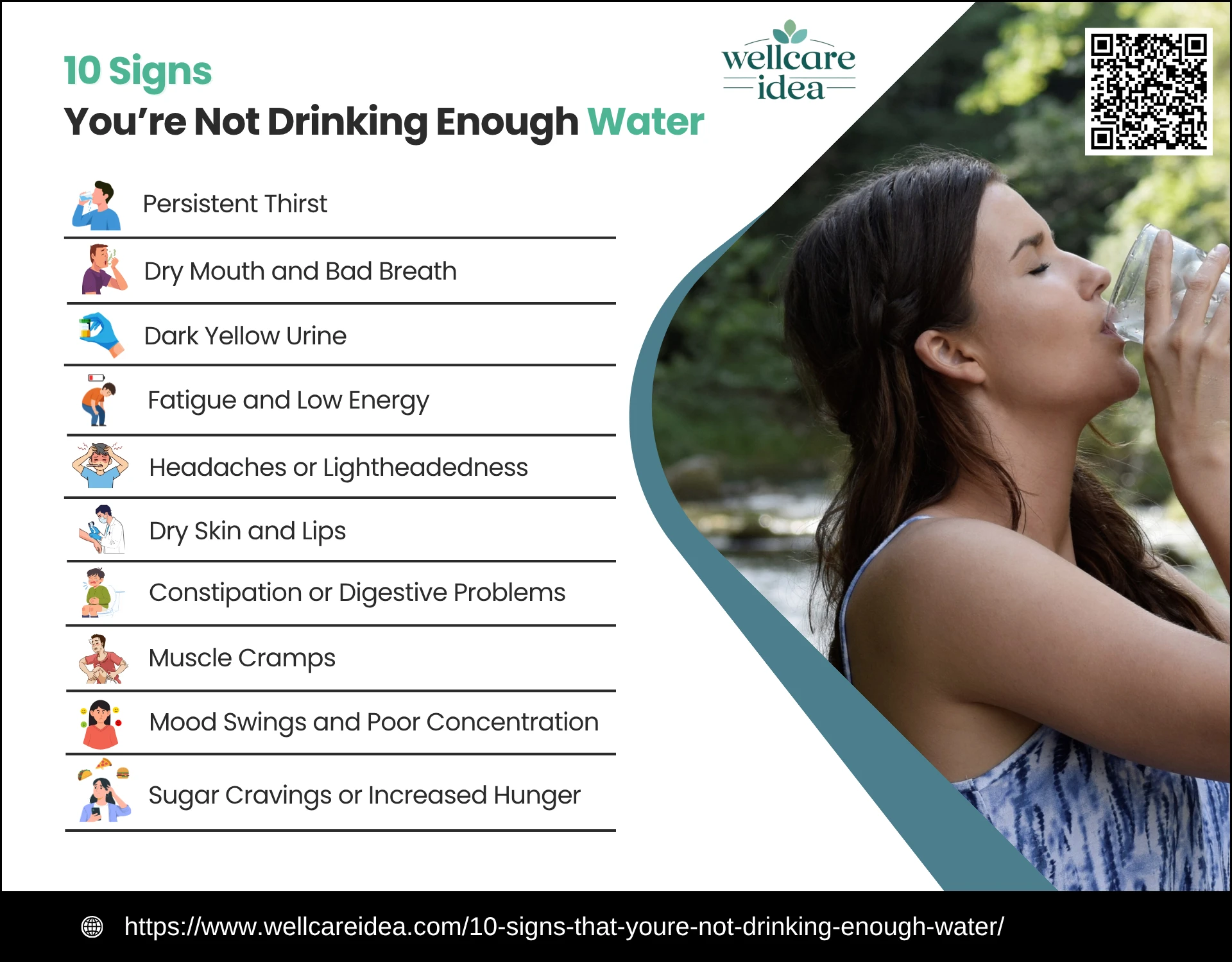
10 Signs That You’re Not Drinking Enough Water
Did you know that even mild dehydration can affect your mood and energy levels?1 Water is the cornerstone of human physiology, constituting about 60% of an adult’s body weight and playing a critical role in every bodily function, from regulating temperature and cushioning joints to transporting nutrients and flushing waste. 2 Despite its paramount importance, many people chronically underestimate their daily fluid requirements, operating in a subtle but persistent state of dehydration. The body has a sophisticated communication system, and it will send clear signals when its fluid reserves are running low. Here are 10 signs your body may be crying out for more hydration.
1. Persistent Thirst
While it may seem self-evident, persistent thirst is an early and obvious signal that should never be ignored. Think of thirst not as the starting pistol of dehydration, but as a first-alert warning system. By the time the thirst mechanism activates, your body’s fluid levels have already dipped below their optimal range 3 A constant, nagging need for a drink is your body’s direct request for replenishment, a sign that it is already working to compensate for a deficit.
2. Dry Mouth and Bad Breath
A dry, sticky mouth is more than just an uncomfortable sensation; it is a direct symptom of reduced saliva production, one of the first bodily functions to be compromised by inadequate fluid intake. 4 Saliva is the mouth’s natural cleansing and lubricating agent, and without sufficient moisture, bacteria can thrive. This bacterial overgrowth is a primary culprit behind persistent bad breath, as the microbes release volatile sulfur compounds. 5 Therefore, that unpleasant taste or odor may not be a digestive issue but a simple plea for water.
3. Dark Yellow Urine
One of the most reliable visual indicators of hydration status is the color of your urine. When the body is well-hydrated, the kidneys efficiently excrete waste with plenty of water, resulting in pale yellow or straw-colored urine. 6 Conversely, when fluids are scarce, the kidneys conserve water, leading to a more concentrated and darker yellow or amber-colored output. Infrequent urination—going for hours without the need to void—is another significant red flag that your fluid intake is insufficient. 7
4. Fatigue and Low Energy
Imagine your circulatory system as a complex network of waterways; when water levels drop, the flow becomes sluggish. Dehydration reduces blood volume, which forces the heart to work harder to pump oxygen and nutrients to your cells, including the brain and muscles. 8 This extra cardiovascular effort can manifest as a profound sense of fatigue, lethargy, and a general lack of motivation. That afternoon slump you blame on a poor night’s sleep or a heavy lunch could very well be a direct consequence of not drinking enough water throughout the day.
5. Headaches or Lightheadedness
The brain is exquisitely sensitive to changes in hydration. When the body is dehydrated, the brain can temporarily contract or shrink slightly from fluid loss, pulling away from the skull and creating tension that results in a dehydration headache. 9 Furthermore, the same reduction in blood volume that causes fatigue can also lead to a temporary drop in blood pressure and reduced blood flow to the brain, causing feelings of lightheadedness or dizziness, especially when standing up quickly. 10
6. Dry Skin and Lips
The quest for glowing, supple skin often leads to expensive creams, but the most powerful elixir may be coming straight from your tap. Skin is the body’s largest organ, and adequate hydration is critical for maintaining its elasticity and barrier function. 11 When dehydrated, the skin can become flaky, itchy, and more prone to wrinkling. Chapped lips are often one of the very first external signs, as the skin there is particularly thin and sensitive to moisture loss.
7. Constipation or Digestive Problems
Water is an essential lubricant for the entire digestive tract. It helps to dissolve nutrients and is crucial for forming and moving stool smoothly through the intestines. 12 When the body is low on water, it will draw more fluid from the colon, leading to harder, drier stools that are difficult to pass. Chronic dehydration is a common, yet often overlooked, contributing factor to constipation, and can also be associated with bloating and abdominal discomfort.
8. Muscle Cramps
Electrolytes like sodium and potassium are vital for facilitating muscle contractions. Dehydration disrupts the delicate balance of these electrolytes, making nerves more sensitive and increasing the likelihood of spontaneous, painful muscle spasms and cramps. 13 This is especially prevalent during or after intense physical exertion or in hot environments, where both fluids and electrolytes are lost through sweat. A sudden charley horse could be your muscles protesting a lack of fluid support.
9. Mood Swings and Poor Concentration
The brain’s performance is highly dependent on its hydration status. Research has demonstrated that even mild dehydration—a loss of just 1-2% of body weight—can impair cognitive functions, including concentration, alertness, and short-term memory. 14 This mental fog often goes hand-in-hand with mood disturbances. Studies have linked inadequate fluid intake to increased perceptions of task difficulty, higher levels of anxiety, and greater feelings of irritability and fatigue. 15 If you’re feeling inexplicably irritable or struggling to focus, a glass of water might be a more effective solution than another cup of coffee.
10. Sugar Cravings or Increased Hunger
The body’s signals for thirst and hunger are regulated by the same part of the brain, the hypothalamus, and they can sometimes be confused. When you are mildly dehydrated, it can manifest as a sudden craving, often for something sweet. This happens because the body may have difficulty with glycogen production (stored glucose) when water-stressed, leading it to seek a quick energy source. 16 Before reaching for a snack, try drinking a glass of water first and wait 15-20 minutes. You may find the craving subsides, revealing it was thirst all along.
How Much Water Do You Really Need?
The age-old advice of drinking eight 8-ounce glasses of water a day is a reasonable and easy-to-remember starting point, but individual needs can vary significantly. 17 A more personalized approach is to calculate your needs based on body weight, aiming for 30-35 milliliters per kilogram. For a 70 kg (154 lb) person, this equates to roughly 2.1 to 2.5 liters per day. Factors such as physical activity level, climate (hot or humid weather), pregnancy, and breastfeeding all increase fluid requirements. 18 A simple and effective way to monitor your status is to check the color of your urine, aiming for a consistent pale yellow, or to use a hydration reminder app if you need a prompt.
Tips to Stay Hydrated
Making hydration a seamless part of your day is easier with a few strategic habits.
1. Carry a Bottle: Keep a reusable water bottle on your desk, in your car, or in your bag as a constant visual reminder to sip throughout the day.
2. Eat Your Water: Incorporate water-rich foods into your diet. Cucumbers, celery, strawberries, oranges, and watermelon are over 90% water and contribute significantly to your total fluid intake. 19
3. Infuse with Flavor: If plain water is unappealing, naturally flavor it with slices of lemon, lime, cucumber, mint, or fresh berries.
4. Set a Schedule: Use technology to your advantage by setting hourly reminders on your phone or computer to take a water break, ensuring consistent intake rather than playing catch-up at the end of the day.
Conclusion
Staying adequately hydrated is one of the most fundamental, yet frequently neglected, pillars of overall health and wellness. It influences everything from cognitive sharpness and emotional stability to physical performance and digestive comfort. By learning to listen to and understand your body’s subtle signals—be it persistent thirst, unexplained fatigue, or a sudden sugar craving—you can proactively support its intricate needs. A simple glass of water might just be the most accessible and powerful health investment you make today.